
Deep 1.2 mm hole in a brass laser bracket: from 3.5 to 3 minutes per part
By NOW CNC · Production case study · Published · Updated  Reviewed by Xiujuan Wang, Quality Supervisor
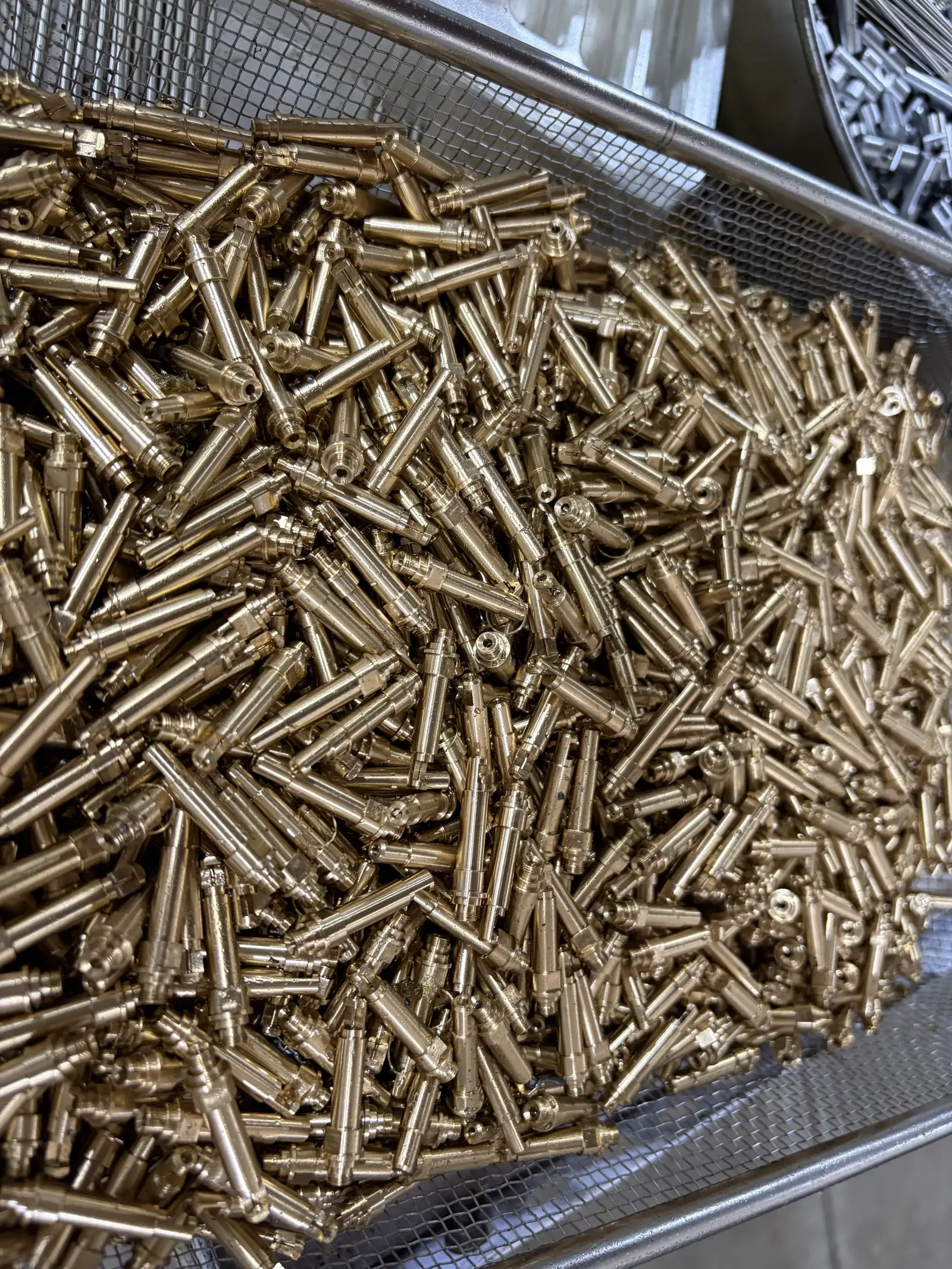
Laser equipment · C3604 brass · Swiss-type turning · 10,000 pcs in 30 days · reject rate below 0.3%
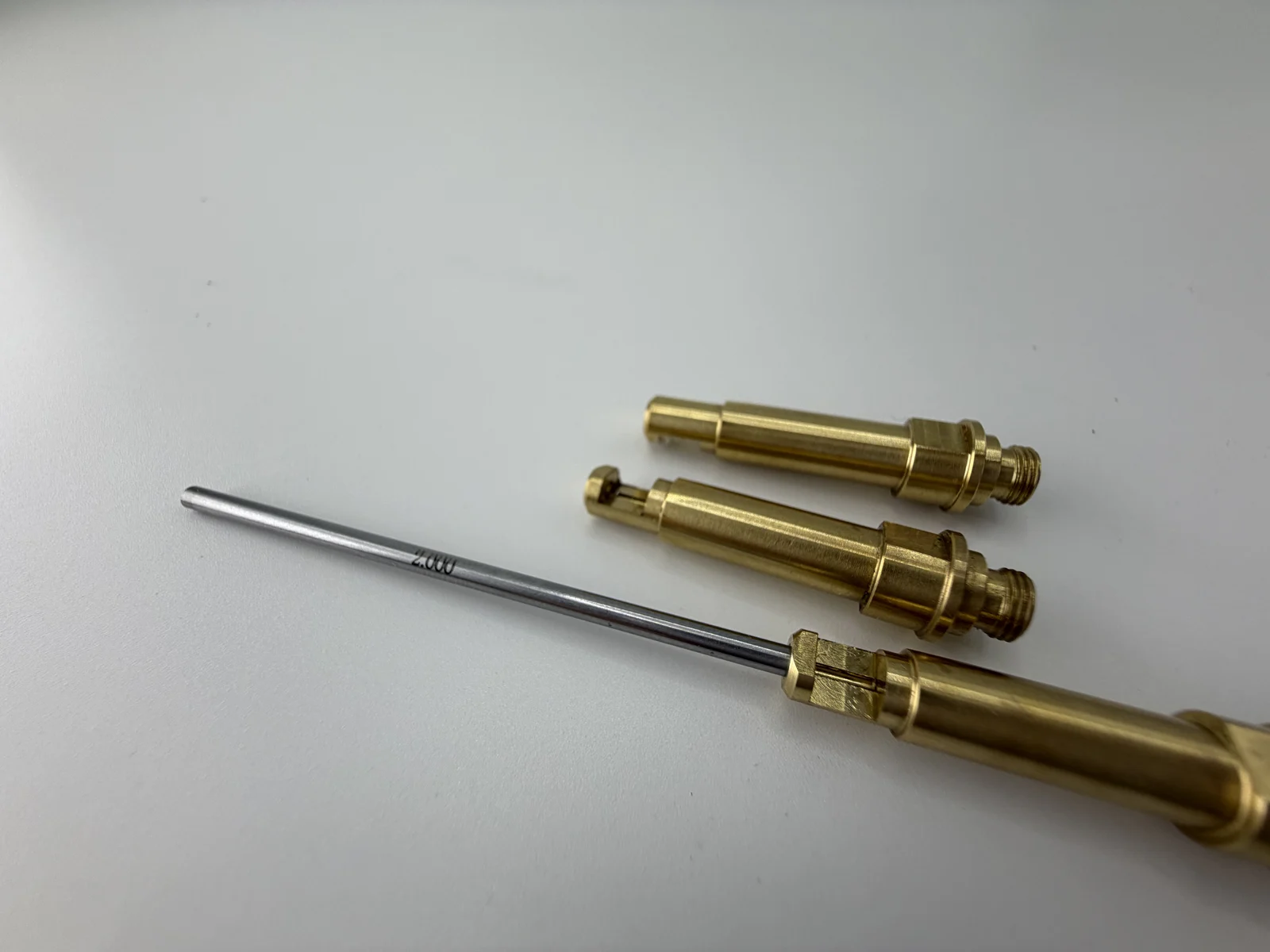
At a glance
| Industry | Laser equipment |
|---|---|
| Part | Bracket |
| Material | C3604 brass |
| Length | 40 mm |
| Quantity | 10,000 pcs |
| Lead time | 30 days |
| Machine | Tsugami Swiss-type lathe |
| Key feature | Ø1.2 mm hole close to 40 mm long, meeting the milled flats |
| Surface roughness | Ra 1.6 |
| Inspection | Ø2.00 mm bore checked on 5 pcs every 30 minutes with 2.00 go / 2.01 no-go pin gauges |
| Cycle time | 3.5 minutes at start, 3 minutes once stable |
| Reject rate | Below 0.3% |
The challenge
This brass bracket is a routine part for us, with one exception. In the middle runs a Ø1.2 mm hole close to 40 mm long, almost the full length of the part and more than 30 times its diameter, and it meets the milled flats. The small hole, the flats and the larger hole all have to be produced in one setup, with both ends concentric.
Operation order
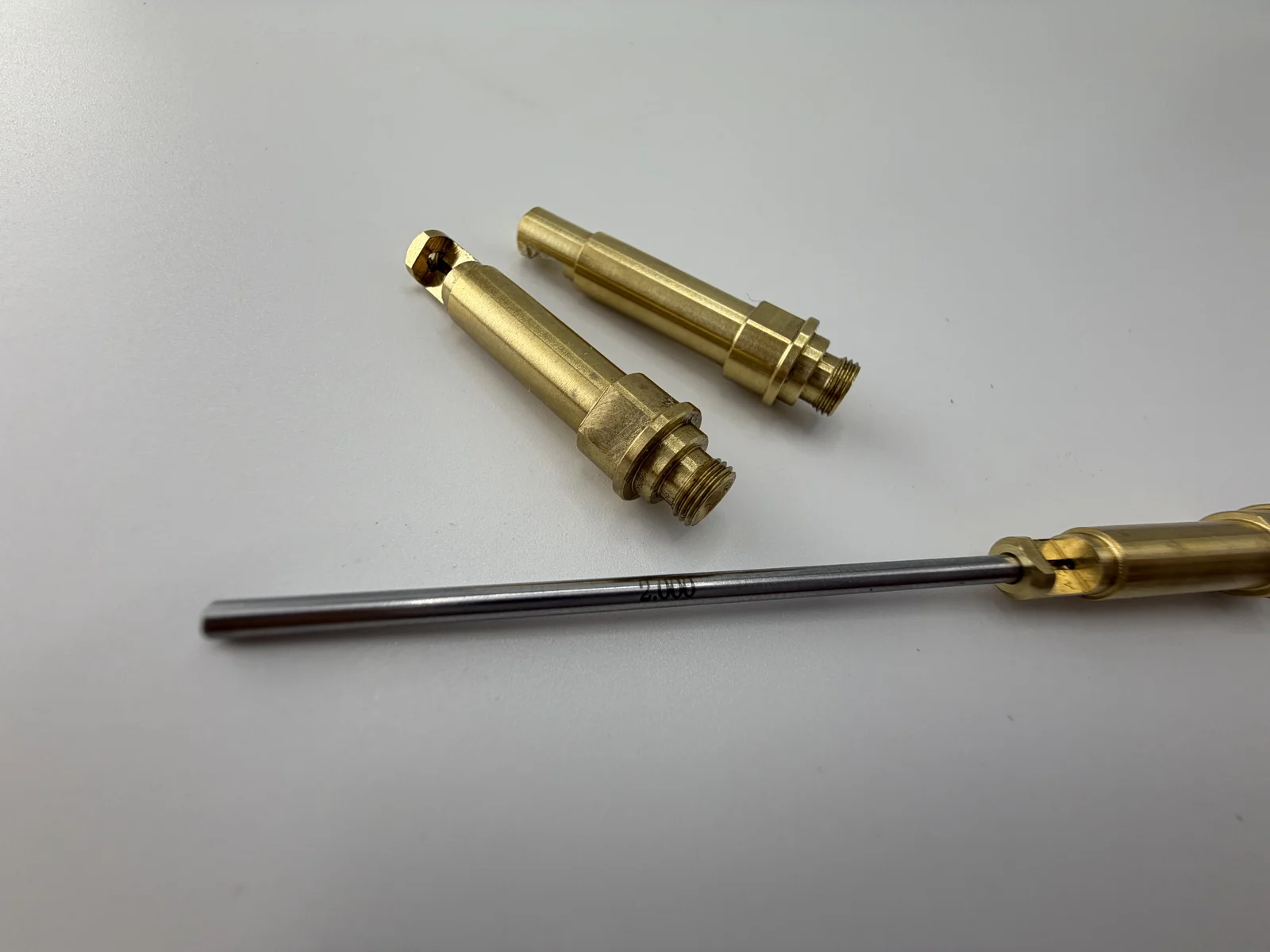
We machine the small hole first, then the larger hole, so that both ends stay concentric. With the small hole already in place, the flats can be machined with stable quality and a faster feed.
Finding the 30 seconds
The first parts took about 3.5 minutes each. During production we found that the end from which the Ø1.2 mm hole is machined decided the cycle time. After changing the sequence, the cycle time settled at 3 minutes per part.
For a routine part, price is mostly cycle time. On 10,000 parts, 30 seconds per part is about 83 machine hours.
Want us to review the cycle time on your part? Send a drawing
Inspection
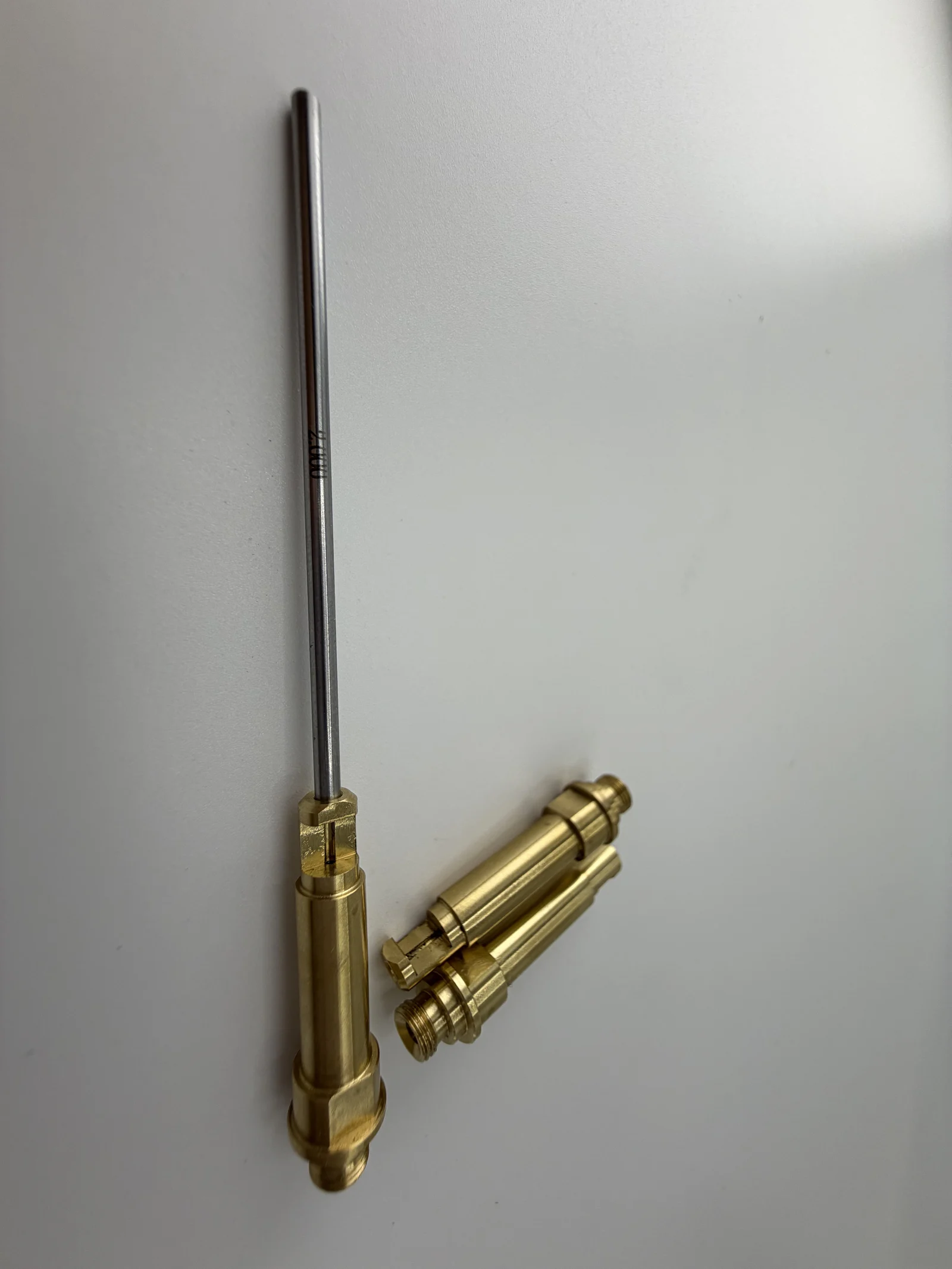
The drawing calls for Ra 1.6 and one precision dimension, a Ø2.00 mm bore. It is checked on 5 parts every 30 minutes with pin gauges: 2.00 mm must go in, 2.01 mm must not. The reject rate stays below 0.3%.
Result
10,000 brackets delivered in 30 days.
What this means for your turned parts
Most of the price of a routine turned part comes from its cycle time. Three things on a drawing move it:
- Surface roughness sets the feed rate and how much finishing work follows.
- Each precision dimension needs inspection time; the more of them, the more often we sample.
- Special requirements need defined control steps, which add handling and logistics cost.
When you ask for a quote, ask the supplier which feature drives the cycle time. It is often a single feature, like the small hole here.