MATERIALS / CARBON, ALLOY AND FREE-CUTTING STEEL
Steel turned parts, made to your drawing
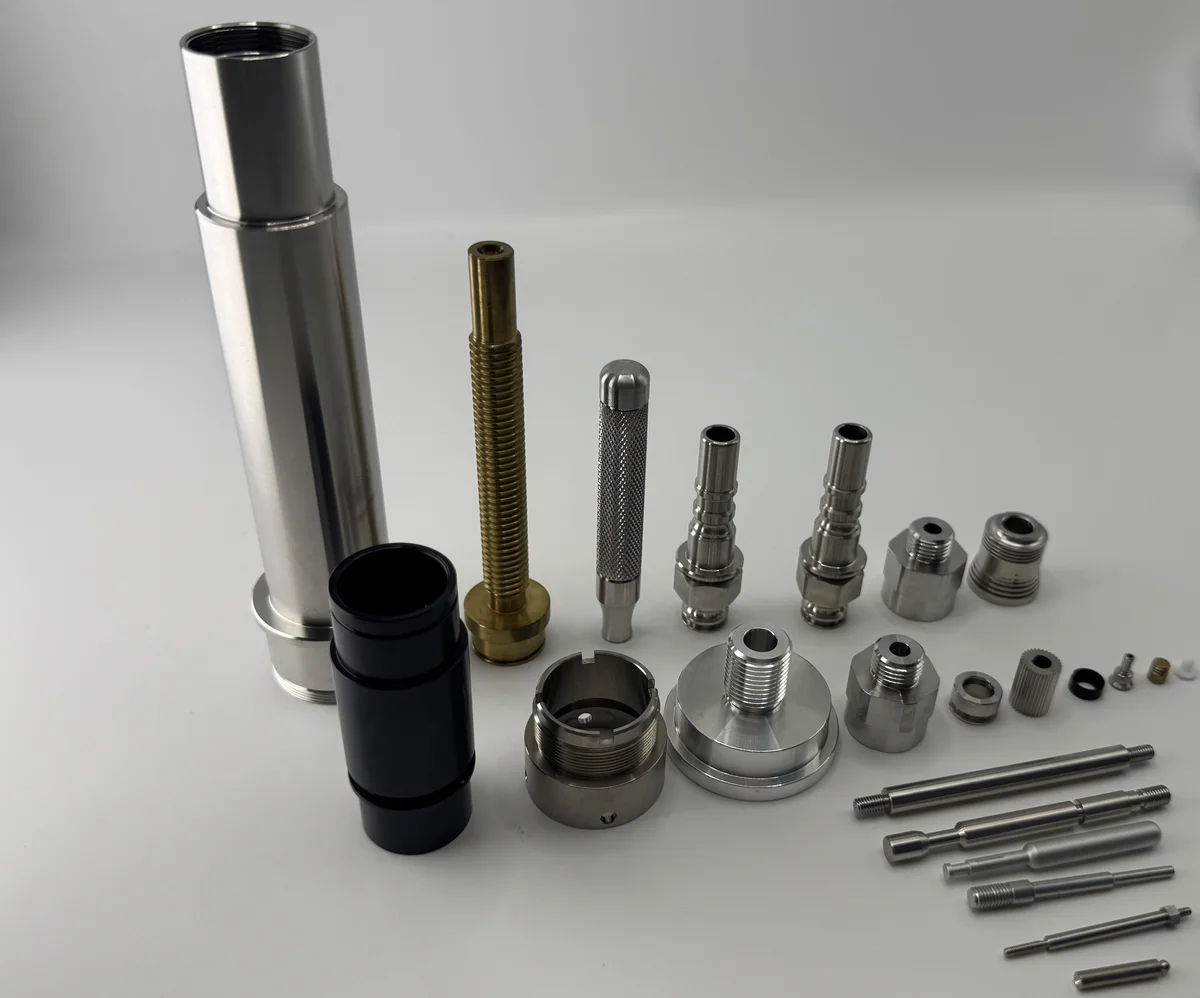
CNC turned shafts, pins, sleeves and threaded parts in carbon, alloy and free-cutting steel from our Dongguan factory, Ø0.5 to 200 mm. Trial runs from 200 pcs, production runs from 2,000 pcs.
- Grades: 20 steel (≈ 1020), 45 steel (C45 / 1045), Q235 (≈ S235JR), Q345 (≈ S355JR), 4140, 12L14 and 1215
- C45 and 4140 usually heat-treated in our own factory
- Heat-treated parts checked for hardness, distortion and surface cracks or scale
- Formal quotation within one working day of a complete PDF drawing
GRADES
Which steel grade to specify
The notes below are the general properties of each grade, not a promise for your application. Your designer decides the grade; name it, with its standard, on the drawing.
Carbon and alloy steel
- 45 steel (C45 / AISI 1045): medium-carbon steel for shafts, pins and other parts that carry load. It can be hardened by quenching and tempering or by induction hardening on a wear surface.
- 4140 (≈ 42CrMo4): chromium-molybdenum alloy steel. After quenching and tempering it is stronger and tougher than C45, so it suits highly loaded shafts and pins.
- 20 steel (≈ AISI 1020): low-carbon steel that machines easily. It is case-hardened (carburized) when a hard surface over a tough core is needed.
- Q235 (≈ S235JR) and Q345 (≈ S355JR): structural steels for general parts that are not hardened.
Free-cutting steel
- 12L14: leaded free-machining steel. It cuts fastest of the steels and breaks chips cleanly, so it is a common choice for high-volume turned parts. It contains lead: check it against RoHS, REACH or your own material rules.
- 1215: sulfur free-machining steel without lead, for parts where 12L14 is not allowed.
Free-cutting steels are not meant to be hardened through and are usually plated after machining for corrosion protection. Small steel parts up to Ø34 mm and 150 mm long can run on our Swiss-type lathes.
All materials we machineHEAT TREATMENT
Heat-treated steel parts
C45 and 4140 parts are usually heat-treated in our own factory; some treatments go to an outside heat treater. An outside treatment adds about 4 working days (approximate) to the lead time.
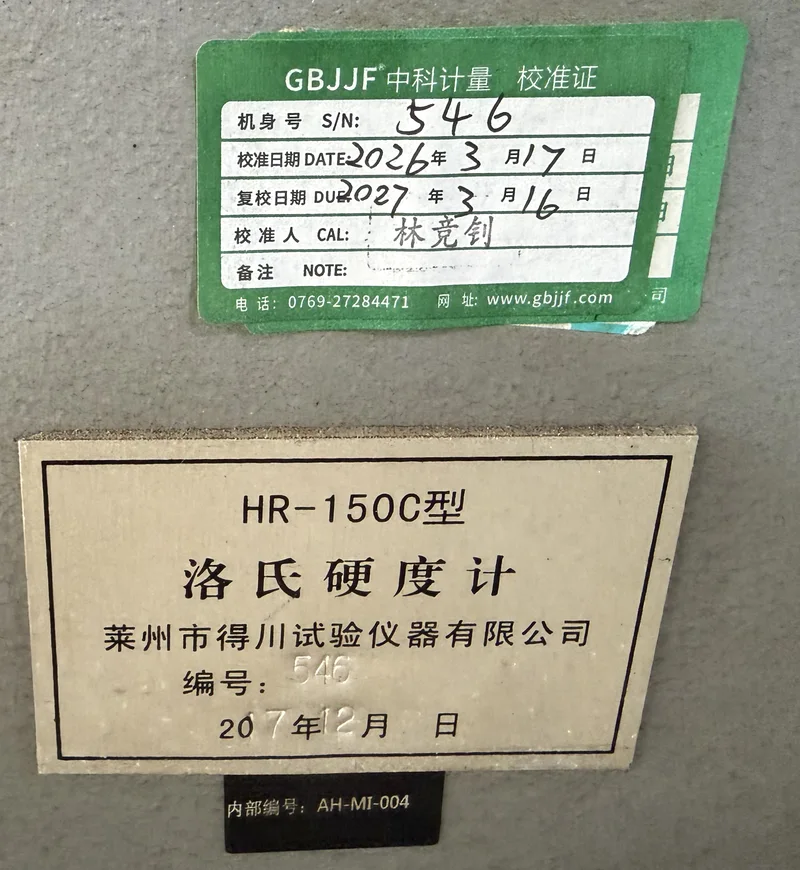
Every heat-treated batch is checked for hardness, distortion and surface cracks or scale before it goes on. Hardness is measured on our Rockwell hardness tester (HR-150C).
On the drawing, state the hardness range (for example HRC or HB), where it is measured, and whether parts are finish-machined or ground after heat treatment.
TOLERANCES, FINISHES AND CERTIFICATES
Tolerances, plating and material certificates
Tolerances
The tolerances on your drawing govern. Untoleranced dimensions follow the general tolerance standard named on the drawing, or ISO 2768-mK if none is named.
Plating
Carbon and free-cutting steel rust without protection, so most steel parts are plated after machining. Plating is done by an outside supplier and adds about 2 working days (approximate). State the coating and any thickness or salt-spray requirement on the drawing.
Material certificates
We send the bar supplier’s material certificate with your parts, free of charge. If you need a certificate with the heat number, ask at quotation; it can add a few days or some cost.
How to check a material certificate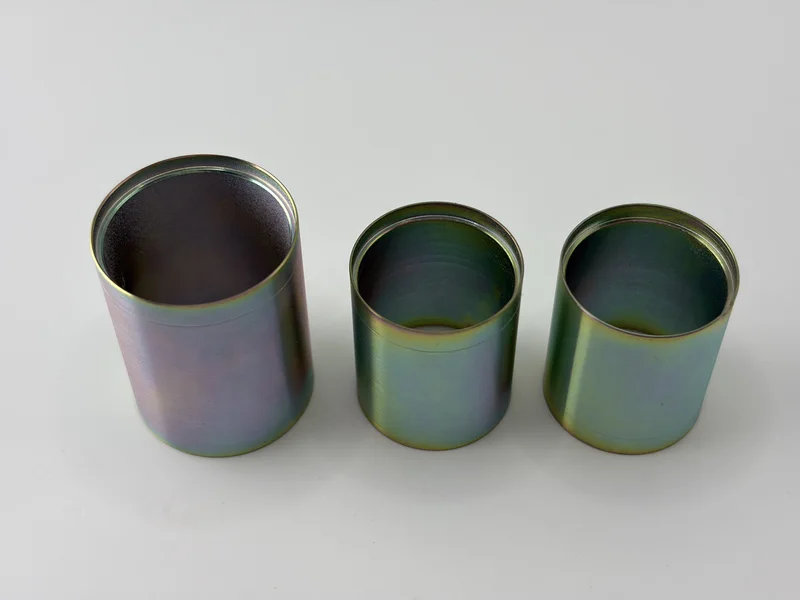
YOUR STEEL PART
Send your steel part drawing
A PDF drawing with dimensions, tolerances, grade, hardness and finish, plus the quantity, is enough for a quotation.