
The short answer
Anodized turned parts cosmetic inspection works when three things are agreed before production: which surfaces are cosmetic, how they are viewed, and what colour reference the parts are matched to. On our orders, most cosmetic rejects come from handling and anodizing rather than from turning, so the standard has to reach the finishing shop as well as the machine shop.
A note on who wrote this: we are a CNC turning factory in Dongguan, China, and our anodizing is done by outside finishing suppliers. The numbers below come from our own orders. Aluminum turned parts we make Jump to what to agree before production How we inspect turned parts
How to set a cosmetic inspection standard for anodized turned parts
“No scratches” means different things to different inspectors. Write down which faces matter, how far away and under what light they are viewed, and which defects are not accepted. A photo of an acceptable part and a rejected one settles most arguments before they start. A standard agreed for one part does not carry over to the next drawing; agree it per part.
How we answer: if the drawing gives no appearance standard, we agree one with you before production, from a sample part or photos. One laser-equipment customer set “no visible scratches at 300 mm under normal lighting”, and 100% of the parts were checked by eye against it.
Keeping colour even between batches
Anodized colour depends on the aluminum alloy and batch, the dye and the coating thickness, so two batches of the same part can differ even when each batch is even. Bright colours usually vary more than black or clear. Give the supplier a colour reference, and keep an approved part to compare later batches against.
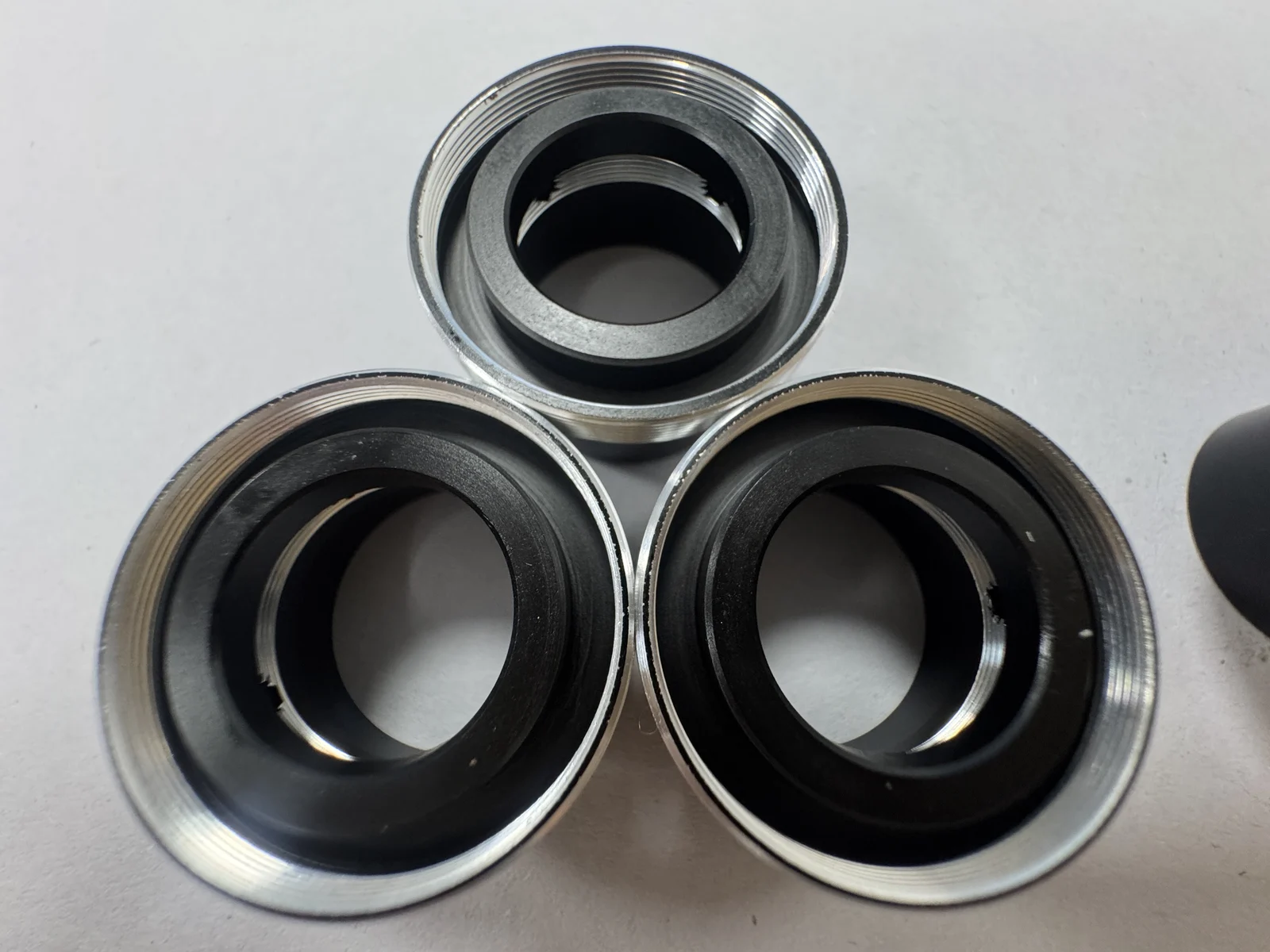
How we answer: we work to your colour sample or chart. After the first batch is approved we keep one part as the reference, and each later batch is compared with it. In our experience black and natural (clear) are the steadiest colours; red, gold and blue are harder to keep even. Our black anodized optical rings are matched to a customer’s colour sample, re-machined after anodizing, checked 100% at final inspection, and run at 200,000 pcs a month.
Where scratches come from
Scratches happen when parts touch each other between operations, in the anodizing racks and in transit. That is why the finishing supplier matters as much as the machine shop, and why a short trial batch at the anodizer before production is worth its time.
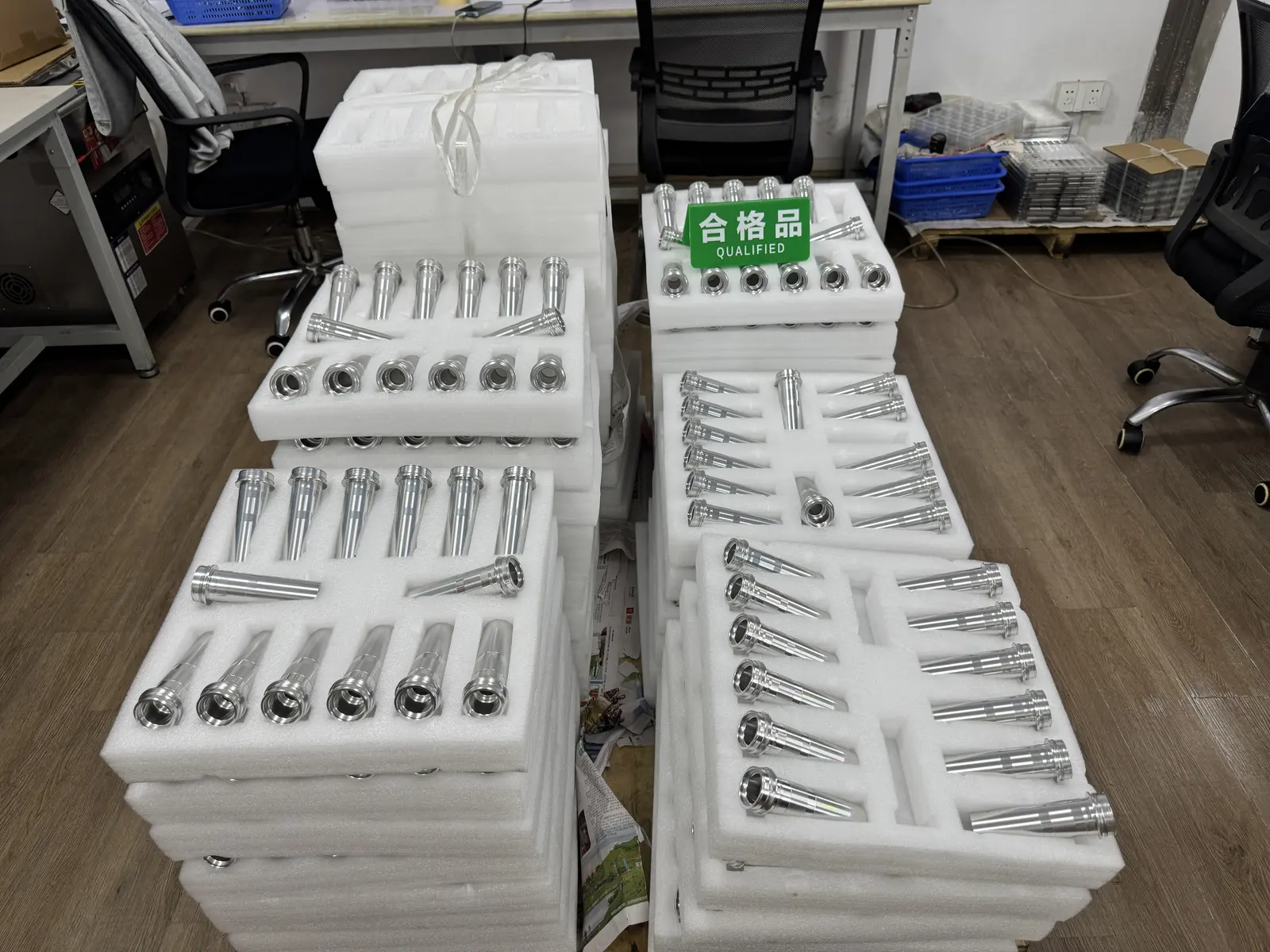
How we answer: for parts with cosmetic requirements, we run a trial batch at the finishing supplier before production. On the sleeve order, three finishing suppliers each anodized 50 trial parts, and we rejected 70%, 10% and 50% of them for appearance. We chose the 10% supplier, whose second trial of 100 parts came down to 3%. The 5,000 sleeves shipped in 20 days, trial included. After machining, each part went into its own foam cavity, and our in-house cosmetic reject rate was 1%. 5,000 anodized sleeves without visible scratches
When parts come back from anodizing
Anodizing changes the surface, and slightly the size, of a part, so parts are checked again when they come back from the finishing shop. A part with a cosmetic defect can be stripped and anodized again, but anodizing turns part of the surface into coating, so stripping takes that metal away; it only works where the tolerances allow.
How we answer: returning anodized parts are checked for appearance, dimensions and coating thickness (see a coating-thickness report). Parts with a cosmetic defect go back to the finishing supplier to be stripped and anodized again, where the dimensions allow. Anodizing takes about 2 days. How finishing fits into lead time
What to agree before anodized parts are made
| Cosmetic surfaces | Mark on the drawing which faces are seen in use. Other faces can then be judged on function only. |
|---|---|
| How parts are viewed | Viewing distance and lighting, for example “no visible scratches at 300 mm under normal lighting”. |
| Defects not accepted | Scratches, dents, stains, white spots and colour streaks on the cosmetic faces. |
| Colour reference | A colour sample, a colour chart reference or an approved part from an earlier batch. |
| Inspection | Whether every part is checked by eye or a sample per batch. |
| Packing | How finished parts are kept apart so that they do not mark each other in transit. |
Ready to bring it together?
Use the inquiry form to organize your part details and target quantities.
Prepare your inquiryPrepared by NOW CNC for production buyers. Manufacturing scope is defined by the reviewed drawing and accepted quotation.